Common pickleball injuries and how to prevent them
By Sarah · Updated 2026-07-10
Pickleball has a reputation as a gentler sport than tennis or squash, but it still carries real injury risk, particularly for players returning to exercise after time away or picking up a racquet sport for the first time. This is general information, not medical advice; consult a healthcare professional for any persistent or severe symptoms.
The injuries that come up most
Ankle and knee strains. The quick, lateral movements needed to cover the kitchen and reach wide shots put stress on ankles and knees, especially for players who have not done this kind of side-to-side movement recently.
Wrist and elbow strain. Often called pickleball elbow, this comes from repetitive gripping and shot motion, particularly with poor technique or a grip size that does not suit your hand.
Shoulder strain. Overhead shots and serves, done repeatedly across a long session, can aggravate the shoulder, particularly in players with existing rotator cuff sensitivity.
Falls. Uneven court surfaces or wet conditions, more common outdoors during rain, increase the risk of a fall, which can range from minor to serious depending on how it happens.
| Injury | Common cause | Prevention approach |
|---|---|---|
| Ankle or knee strain | Sudden lateral movement | Warm up, supportive court shoes |
| Elbow strain | Repetitive grip and shot motion | Correct grip size, technique, rest between sessions |
| Shoulder strain | Repeated overhead shots and serves | Gradual load increase, proper stretching |
| Falls | Uneven or wet court surfaces | Check court conditions, appropriate footwear |
Warming up properly
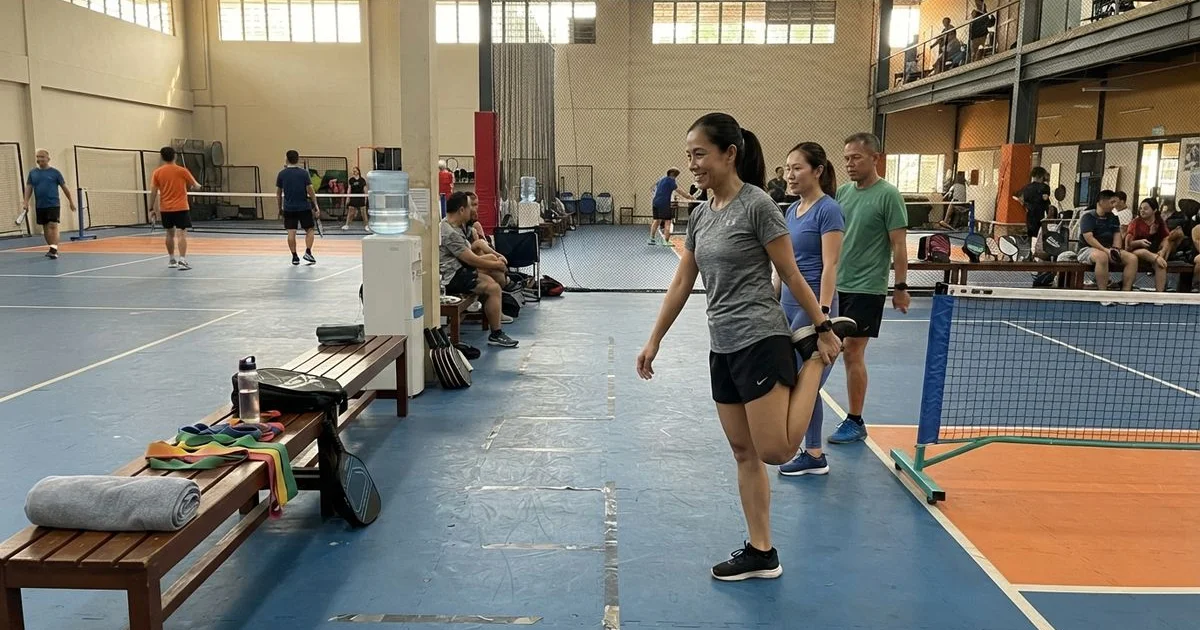
A five to ten minute warm-up of light cardio and dynamic stretching, arm circles, leg swings, and a few practice rallies before scoring starts, meaningfully lowers injury risk. Skipping this because a casual game feels low-stakes is one of the more avoidable mistakes recreational players make.
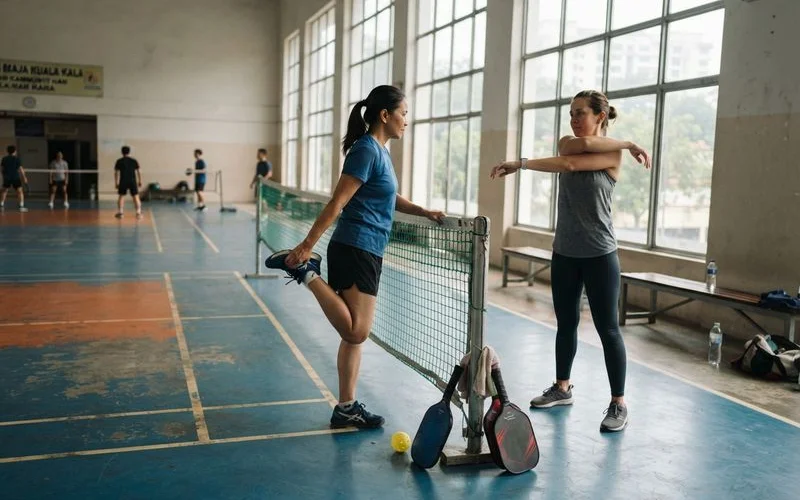
Footwear and court surface matter more than people expect
Non-marking, supportive court shoes designed for lateral movement reduce ankle and knee strain compared with running shoes, which grip well moving forward but slide more during side-to-side movement. Checking a court’s surface condition before playing, particularly outdoors after rain, is a simple habit that avoids a large share of fall-related injuries.
Pacing yourself across a session
Injuries from repetitive strain, like elbow or shoulder issues, tend to build up over a long session rather than happen all at once. Taking short breaks between games, rather than playing continuously for ninety minutes, gives muscles and joints time to recover and reduces cumulative strain. This matters even more if you are returning to the sport after a break or new to regular exercise generally.
Technique and grip size reduce strain more than gear alone
A significant share of elbow and wrist strain traces back to technique rather than bad luck: gripping the paddle too tightly, relying on the wrist instead of the whole arm for power, or using a grip size that does not match your hand. A single lesson focused on grip and basic stroke mechanics, even for an otherwise self-taught player, can meaningfully reduce this kind of cumulative strain over months of regular play. It is a worthwhile investment for anyone planning to play more than occasionally.
Building back up after time away
Players returning to pickleball after weeks or months away are at higher risk than regulars, since muscles and joints lose some of their conditioning during a break. Easing back in with shorter sessions and lighter intensity for the first week or two, rather than resuming at your previous pace immediately, reduces the risk of strain injuries during this readjustment period.
When to rest instead of playing through it
Mild soreness after a session is normal and usually resolves within a day or two. Pain that persists, worsens with activity, or limits your grip or ability to bear weight is a signal to stop and rest rather than push through it. This is general information, not medical advice; see a healthcare professional if symptoms are severe or do not improve within a few days.
Checking a venue’s court surface and lighting before booking, alongside your own warm-up and pacing habits, covers most of what is within your control. Browse pickleball courts with strong facility conditions across the city, and see the scoring method for how listings here are evaluated.
FAQ
- What is the most common pickleball injury?
- Ankle and knee strains from sudden lateral movement, along with wrist and elbow strain from repetitive shots, are among the most commonly reported issues among recreational players.
- Do I need to warm up before a casual pickleball session?
- Yes. A short warm-up of five to ten minutes of light movement and dynamic stretching meaningfully lowers injury risk, even for a casual social game.
- Is pickleball elbow different from tennis elbow?
- They are closely related conditions, both caused by repetitive strain on the forearm tendons, and the prevention approach is largely the same: proper technique, grip size, and rest between sessions.
- When should I see a doctor for a pickleball-related injury?
- If pain persists beyond a few days, worsens with activity, or affects your ability to grip or bear weight, see a medical professional rather than playing through it.