Renting paddles and gear vs buying your own pickleball equipment
By Sarah · Updated 2026-07-08
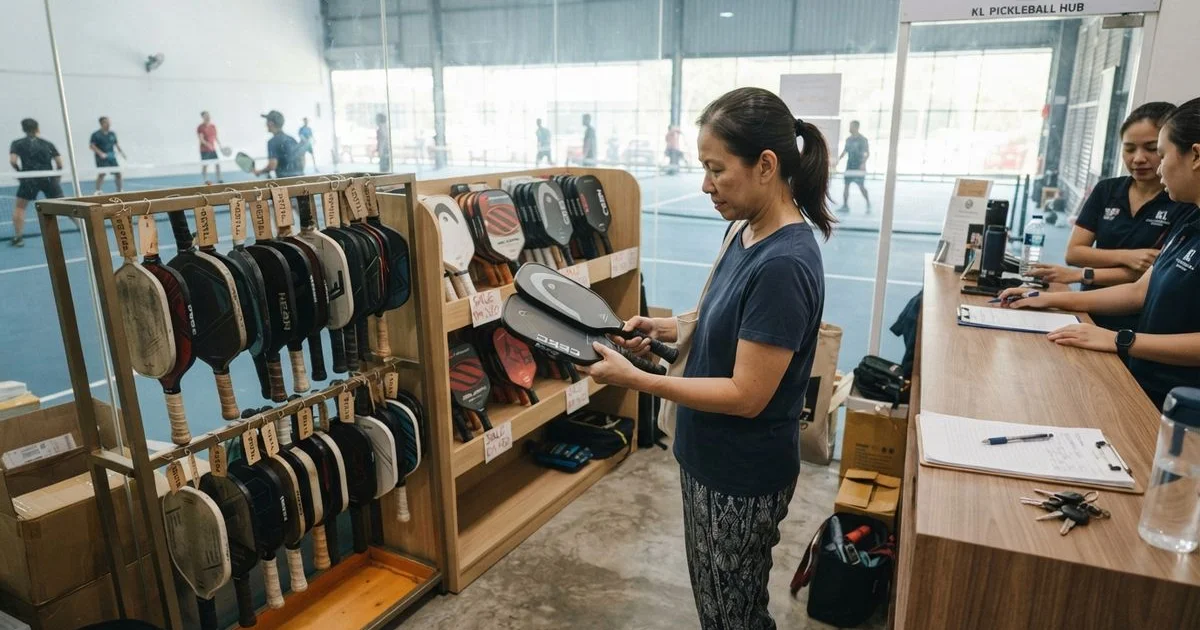
Whether to rent or buy pickleball equipment comes down to a simple question: how often are you actually going to play, and do you already know what you like. Most players do not need to decide this on day one.
Why renting makes sense at first
Renting removes the guesswork of buying a paddle before you know your preferences. Weight, grip size, and paddle face material all affect feel, and a beginner rarely has enough experience to judge these correctly on a first purchase. House rental paddles at most venues are a solid, standard option, good enough to learn fundamentals on without spending anything upfront.
| Factor | Renting | Buying |
|---|---|---|
| Upfront cost | None, small per-session fee | One-time cost |
| Fit and feel | Standard house option, limited choice | Matched to your preference over time |
| Convenience | Nothing to carry or maintain | Bring and store your own gear |
| Best for | First few sessions, occasional play | Regular play, once you know your preference |
When buying starts to make more sense
Three signals suggest it is time to buy: you are playing more than once a week, you keep requesting the same “premium” rental option because the standard house paddle feels off, or you are noticing specific things, like grip size or how the paddle face feels on contact, affecting your shots. Once any of these show up, a beginner or intermediate paddle typically pays for itself within a few months of what you would otherwise spend on rental fees.
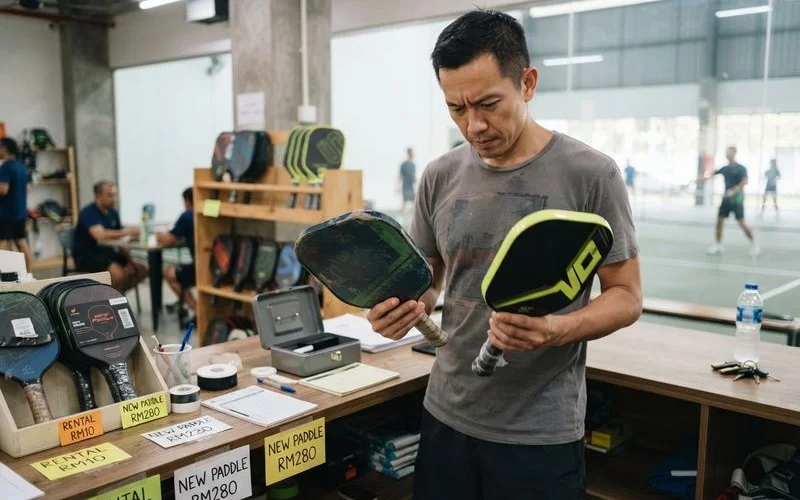
What actually changes between paddle tiers
Paddle face material affects how much control and spin you get on the ball, while core material affects power and the feel on contact. Beginners generally benefit less from a premium paddle than intermediate or advanced players do, since technique has not yet developed to the point where these differences are consistently noticeable. Buying a mid-range paddle rather than the cheapest or most expensive option is a reasonable default for most players moving past the rental stage.
Buying balls and other small gear
Balls are cheap enough that most regular players eventually buy a supply of their own, less for cost savings and more for convenience and consistency, since indoor and outdoor balls differ and having the right type on hand avoids a scramble before a session. A separate paddle bag or cover is worth adding once you own a paddle, mainly to protect it from scratches and heat if left in a car.
Do you need a backup paddle once you own one
Once you own a paddle and are playing regularly, a second one is worth considering mainly as insurance rather than a performance upgrade. Paddles do occasionally crack or wear out faster than expected, and turning up to a tournament or a rare booking with no working paddle is a frustrating way to lose court time. A backup does not need to match your main paddle exactly, a similar weight and grip size is usually close enough to play a session without much adjustment.
What to check before a first purchase
If you are buying for the first time, check that the paddle is approved for the format you intend to play in, since some tournaments and leagues require an approved paddle rather than any paddle you already own. Grip size matters more than most first-time buyers expect, a grip that is too large or small affects control more than paddle weight does. Trying a friend’s paddle or a rental option close to what you are considering, before committing to a purchase, is worth the extra step.
Making the decision without overthinking it
If you are still unsure, default to renting for your first month regardless of how enthusiastic you feel on day one. Enthusiasm in week one does not always predict whether you will still be playing weekly by week six, and renting keeps your options open without a wasted purchase if your interest fades. Once you have a month or two of consistent play behind you, buying becomes a low-risk decision rather than a guess.
For gear-related questions once you own a paddle, checking pickleball courts in your area for their rental and equipment policies is a good way to compare venues, and the scoring method explains how those venues are ranked here.
FAQ
- How long should I rent before buying my own paddle?
- Most players rent for four to six sessions, which is usually enough to work out whether they prefer a lighter or heavier paddle and whether they will keep playing regularly.
- Does a more expensive paddle actually play better for a beginner?
- Not necessarily. Paddle face and core materials matter more once your technique is developed enough to notice the difference; a beginner often cannot tell much difference between a mid-range and premium paddle.
- Is a rented paddle noticeably worse than owning one?
- House rental paddles are usually a solid standard option, fine for learning the game, though regular players often prefer the feel and consistency of their own paddle over time.
- Should I buy balls too, or is renting fine long-term?
- Balls are cheap enough that most regular players eventually buy their own, mainly for consistency and convenience rather than cost savings.