What to expect at your first pickleball session in Kuala Lumpur
By Sarah · Updated 2026-06-11
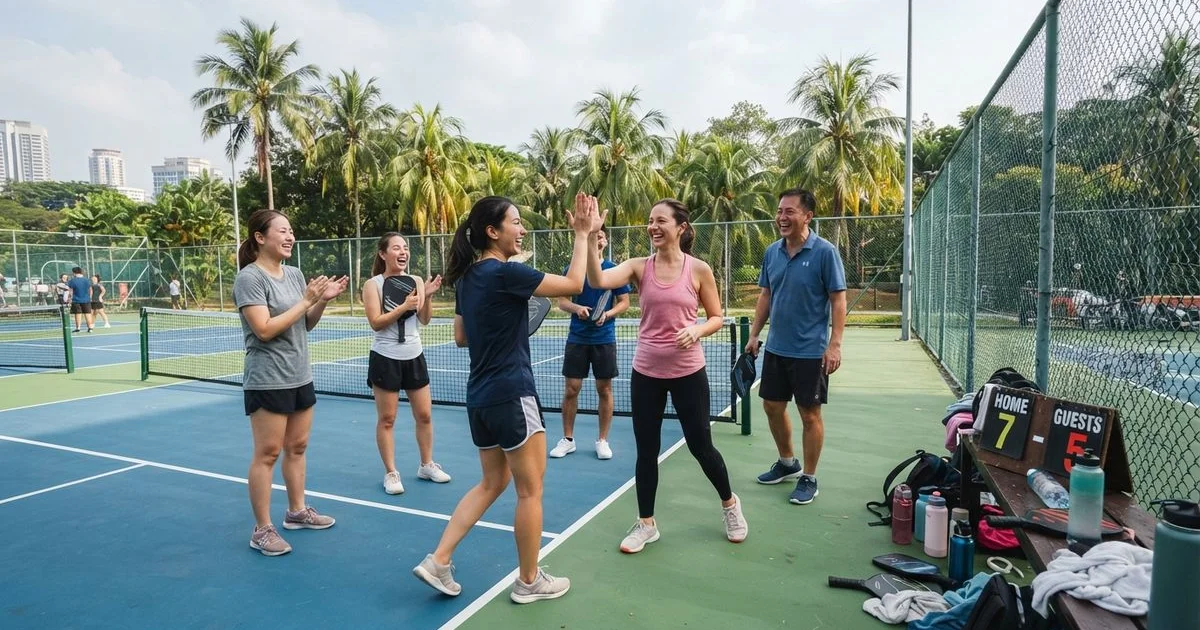
Walking into a pickleball court for the first time is less intimidating than it looks from outside. Games are short, partners are usually happy to explain the score as you go, and most venues are set up to fold a new player into a group within minutes. Here is what an actual first session looks like, step by step.
Before you arrive
Check whether the venue runs a specific beginner or open play session versus general court booking. A beginner-friendly session is the easier starting point, since staff and other players there expect newcomers and pace the group accordingly. Arrive ten to fifteen minutes early to sort out any paddle or ball rental and get a quick rundown of the court layout before play starts.
What happens when you get there
- Check-in and gear. Staff confirm your booking or session slot and point you to rental paddles if you need them.
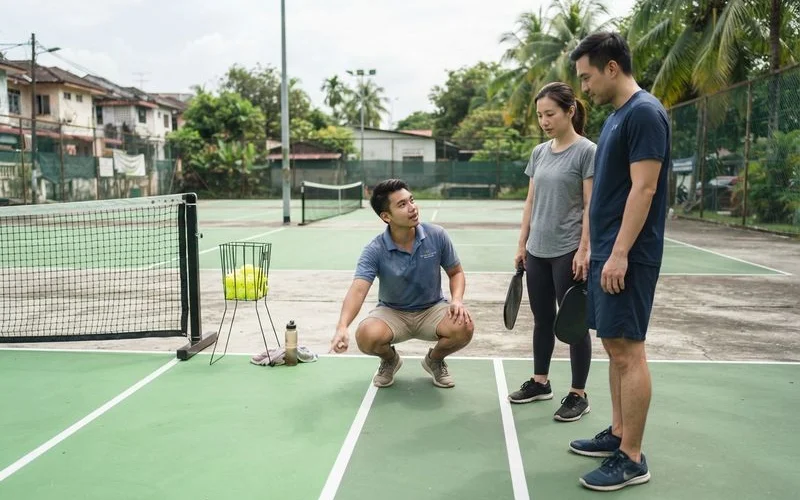
- A short orientation. Most venues give new players a two-minute explanation of the court, the kitchen line, and how serving works, rather than expecting you to have read the rules beforehand.
- Warm-up rally. You will usually hit a few practice shots back and forth before keeping score, mostly to get a feel for the ball’s bounce, which is livelier than a tennis ball.
- Games begin. Doubles is the default format for beginners, since it is more forgiving and social than singles. Games typically play to 11, win by two.
The rules that actually matter on day one
| Rule | What it means in practice |
|---|---|
| Double bounce | The ball must bounce once on each side before volleying begins each point |
| The kitchen | The no-volley zone near the net; you cannot hit the ball out of the air while standing in it |
| Serve | Underhand, diagonally, below waist height |
| Scoring | Only the serving side can score; server calls the score before each serve |
You do not need to memorize anything beyond this table before your first session. Everything else, like faults and let serves, becomes obvious through play, and other players will point out mistakes gently rather than expect perfection.
What to wear and bring
Flat, non-marking court shoes matter more than any other piece of gear on your first visit. Running shoes grip forward motion fine but slide sideways, which is where most first-session ankle rolls happen. Light, breathable clothing works better than cotton, especially outdoors, and a small towel is worth carrying even indoors, since air-conditioned courts can still get humid once a few games are underway. Bring water regardless of venue; not every court sells drinks on site.
What surprises most first-timers
The ball moves faster than it looks from outside, but the court is small enough that you rarely have to sprint far to reach it. Rallies are shorter than tennis, which means more points happen per minute and more chances to improve within a single session. Most people find their footing by the second or third game rather than the first, so do not read too much into an awkward opening game.
Making your first session count
Pick a doubles group over singles if you are given the choice: it halves the court you need to cover and gives you a partner to read the game with. Ask your partner or an experienced player nearby for one piece of feedback after each game rather than trying to fix everything at once. Most beginners improve fastest by playing several short games back to back rather than one long drilling session, since match play forces you to react instead of overthink.
If your first session goes well, book a follow-up within the week while the basics are still fresh. Momentum matters more than intensity when you are new to the sport, and a gap of two or three weeks between sessions tends to reset progress more than a shorter, more frequent schedule would.
Not every court runs the same style of beginner session, so it is worth trying a couple of different venues in your first month to find one where the pace and crowd suit you before settling into a regular booking. Listings here are ranked using the scoring method, which weighs recent player sentiment alongside rating and completeness, a useful shortcut when you are picking your first venue.
FAQ
- How long does a first pickleball session usually last?
- Most beginner sessions or open play slots run 60 to 90 minutes, which is enough time to play several games and take breaks between them.
- Will I be the only beginner on court?
- Unlikely. Beginner-friendly venues run sessions specifically aimed at new players, and open play groups are usually mixed by skill so you are not the only one learning.
- What are the two or three rules I actually need to know before I start?
- The double bounce rule, the no-volley zone around the net (the kitchen), and serving diagonally underhand. Staff or other players will usually remind you if you forget.
- Do I need to know how to keep score before I play?
- No. Most partners will call the score out loud each point, and it becomes intuitive within a game or two.
Related on this site
- Browse beginner friendly providers
- Pickleball for beginners in KL: how to start without owning gear
- Pickleball coaching costs in Kuala Lumpur: group, semi-private and private lessons
- How online pickleball court booking works in Kuala Lumpur
- Indoor vs outdoor pickleball courts in KL: which should you choose
- All guides →